Landing Pages: Hallmarks of Good Landing Page Design
As a small business owner, website landing pages are one of your best tools to collect leads & support conversion. Despite this, its still a hurdle for marketing teams to get a good landing page design up & running.
Why is this so? A reason is actually because of inexperience, or a lack of technical expertise (especially for SMEs), or simply the business is not really keen or unsure how to go about using landing pages.
You may wish to read on as we cover the main points of a good landing page, and offer some examples as well for your reference.
What is a landing page?
In digital marketing terms, a landing page is a web page created specifically for a marketing or advertising campaign. This is different from your website home page which is more meant for visitors to explore & move around to find more info.
A good landing page has only one core focus: leads collection.
What makes a good landing page?
Landing pages can differ from industry to industry but will normally have a few common features. We go through them below.
1. Clear Offer
For landing pages, you want to be crystal clear about the offer, and fast. Within the first five seconds, a visitor should understand exactly what you are offering. Use an eye-catching image, a bold header, and set a CTA with copy that’s aligned with your brand and optimized for conversion.
2. Focus on the Result
Don’t list features and technical specifications; instead, go straight to the intended transformation and results. Show the reader how much better their life or business will be after using your product. Help the lead visualize the destination, not the journey.
3. Social Proof
Use social proof to bridge the trust gap and show that others have trusted you and succeeded. Testimonials, client logos, and case studies all work well here, but keep it short and effective. Help to put the customer at ease so they view your offering as a potential solution instead of a gamble.
4. Minimize Distractions
The flow of a landing page is very different from a website homepage. You want to minimize any distractions and outbound links which can pull your customer away from completing the form and submitting the lead capture.
The rule is one goal per page. Everything else that does not help with that goal shouldn’t be on that page.
5. Animation to Drive Attention
Animations can help greatly if used tactically. When used well, they draw attention to key conversion points that you want the customer to see, such as a set of key selling points or the eventual result.
When using animations, it’s better to be bold. If an animation is too subtle, it likely won’t be picked up by the user, defeating the purpose of using it.
6. Sweeten the Deal with a Promotion or Timed Offer
For certain products and services, a well-placed promotion or timed offer can greatly encourage a lead to commit. If a lead is actively looking for a service and encounters a timely offer, it can tip the scales—it doesn’t need to be a massive discount, just enough to create urgency.
7. Minimal Obligation
Generally, you want to make the “ask” as easy as possible. You only need adequate information from the lead to proceed. Take time to assess exactly what information is required to maintain high-quality leads without creating unnecessary friction.
Once you’ve nailed down the required fields—usually a name, email address, and relevant remarks—ensure the contact form’s UX is easy to navigate. This makes lead collection seamless and faultless.
8. A/B Testing
Let the data show the results. A/B testing is essential for assessing the performance of different landing page variations. This clearly shows which version converts better, allowing you to focus on continuous, incremental improvements that result in significant performance gains over time.
9. Heatmaps for Awareness
Tools like Hotjar or Clarity show you where users are clicking and how far they scroll. For example, if users are stopping halfway down the page, it means your most important content is being missed. Heatmaps reveal the visual data behind user frustration.
10. Tag for Remarketing
Most people won’t buy on day one. By installing tracking pixels (Meta, Google, LinkedIn), you can keep those visitors in your remarketing loop and follow up with ads later. Remarketing is the most cost-effective way to bring back warm leads who just weren’t quite ready to commit during their first visit.
Good landing page examples
Our agency has done the heavy-lifting to find some good landing pages for you to view. Check them out along with comments below:
1. Proof
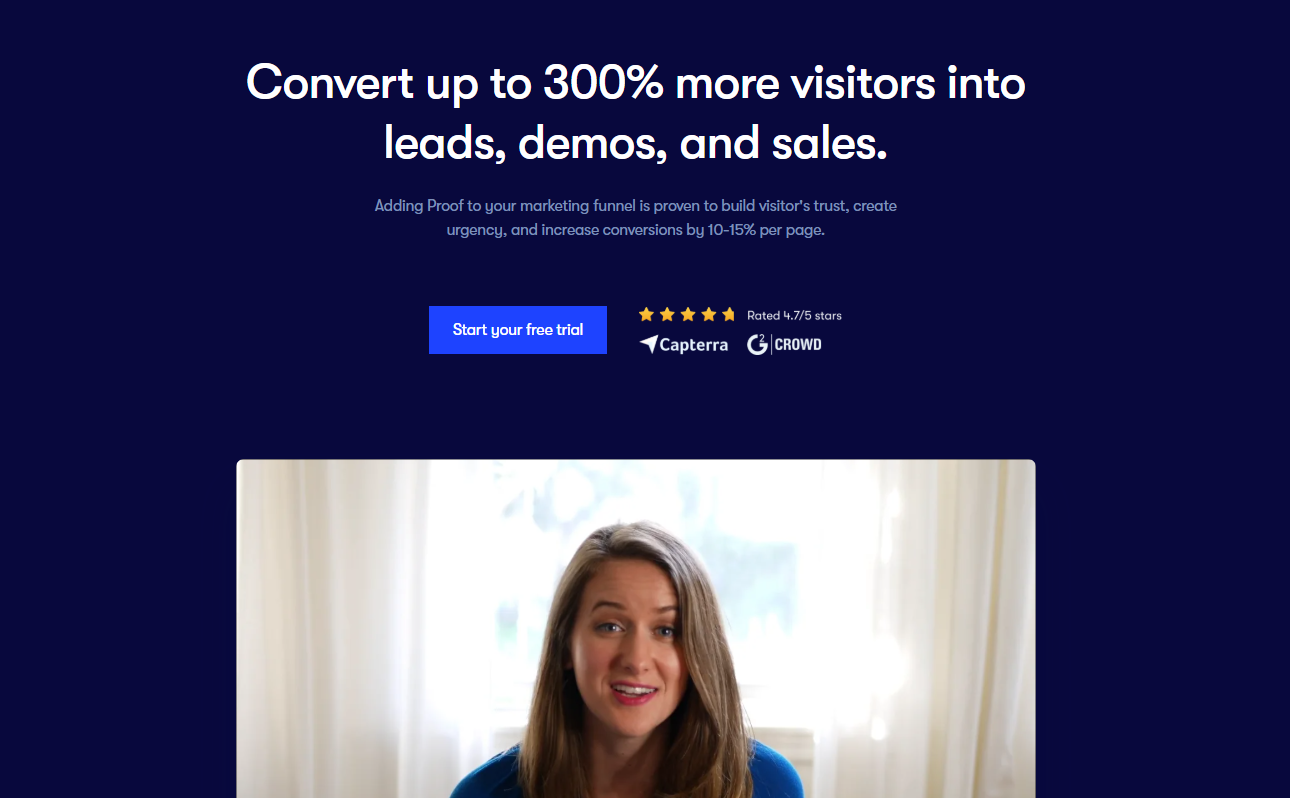
Proof is a US company that develops digital marketing tools that support conversion rate optimization. It makes sense that their own service page performs exceptionally well in this regard.
The page starts off strong with a bold headline that targets the exact results prospects are looking for. It is immediately followed by a series of customer testimonials and key features that clearly state how the service delivers results. Through this, customers can easily visualize how the tool would work on their own site.
More reviews follow, as well as a clear CTA for a free trial. You can check out the website below:
Click here to view the Proof Pulse landing page →
2. Pocus
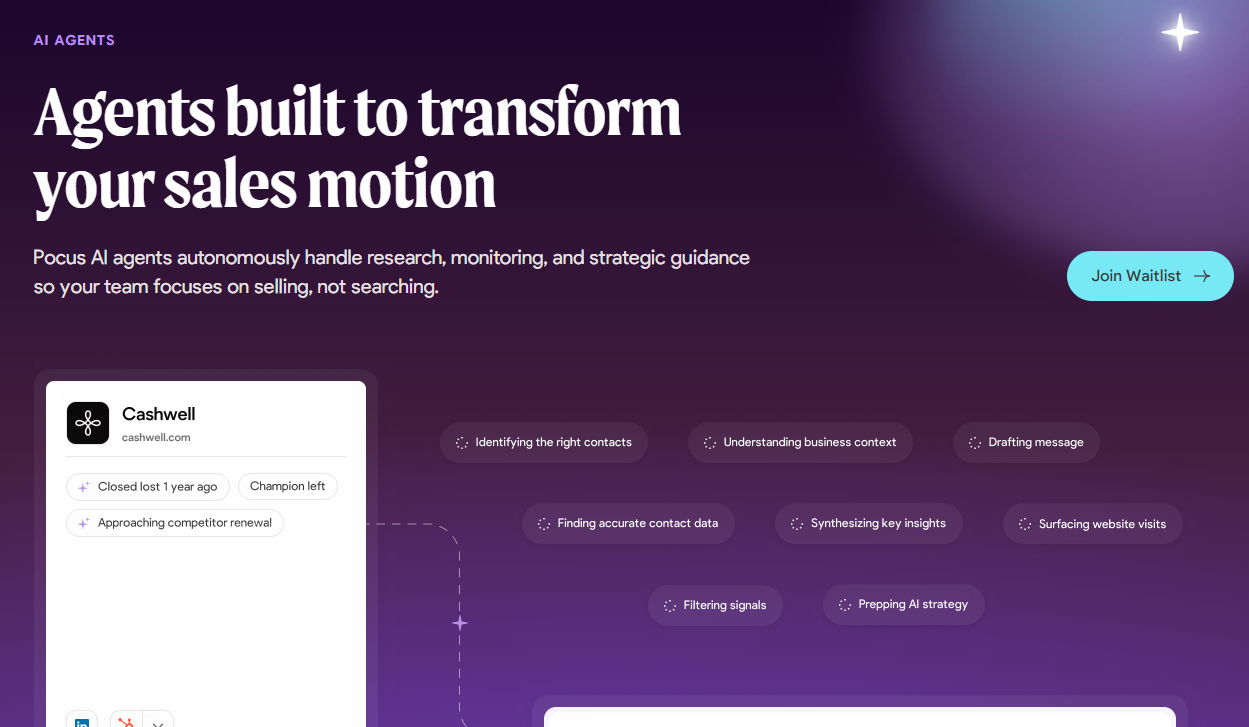
Another US company that focuses on AI sales intelligence for sales teams, their AI product page captures the framework of a good landing page well. It is a more modern landing page that makes a good attempt at educating the customer.
Eye-catching graphics and animations help drive conversion, ending with a nice CTA at the end of the page.
View the Pocus AI Landing Page →
3. Opus Pro
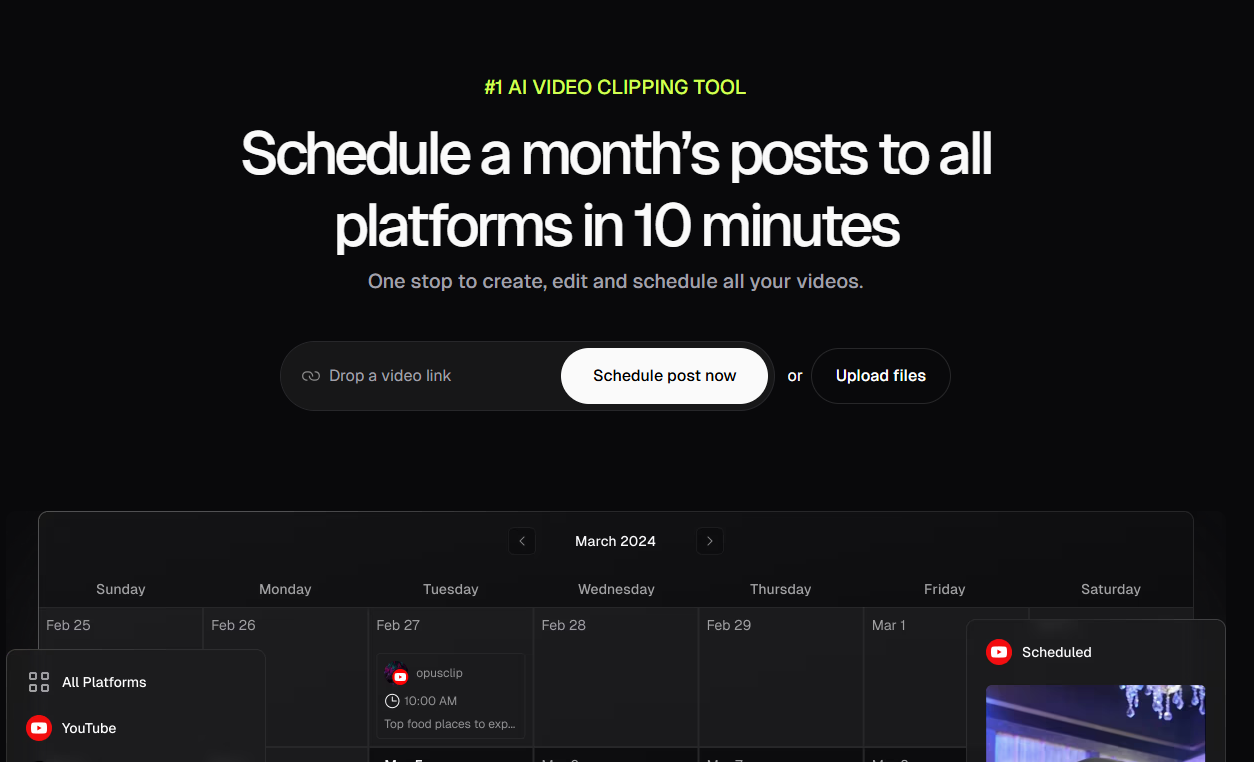
Opus Clip is a US company specializing in AI video clipping and editing. They offer several service tiers, but today we’re looking at the Pro tier, which is their mid-range offering.
Like Pocus, this landing page embraces a modern design aesthetic. Well-designed graphics effectively explain the product’s functionality and clearly show which platforms the AI integrates with. An accurate FAQ section and an eye-catching CTA round out the page perfectly.
Launch your website sales funnel
Whether you use WordPress, Webflow, or Wix, landing pages are a great way to boost conversion and generate leads. The trick is to set up a workflow where your ads or social media channels capture the top-of-funnel traffic and transition them seamlessly to the landing page for conversion.
It’s important to also follow up with A/B testing to ensure the system works as intended and continues to perform over time. And also to ensure the landing page loads fast which is why we recommend the Quic Cloud CDN.
For other relevant articles on conversion for your website, do view them below:
Concepts that Convert: Brand Positioning through your Website →
Swing with Blog Marketing: 16 Website Content Ideas for B2B Leaders →
Beyond the Basics: 9 Advanced WordPress Features for Power Users →
Summary
A high-converting landing page is built on these ten core components: 1. A clear offer, 2. Being results-focused, 3. Adding social proof, 4. Minimizing distractions, 5. Using animations (just enough), 6. Including a promotion or timed offer, 7. Ensuring minimal obligation, 8. Consistent A/B testing, 9. Regular heatmap reviews, and 10. Implementing remarketing tagging.
Other best practices include having an attractive and modern website design. It doesn’t need to be overly fancy—it just needs to be good-looking and strictly in line with your brand aesthetic. Additionally, ensure you use well-selected images and graphics to help get your point across clearly and effectively.
When used correctly, yes. They help to streamline the conversion process, just as you would assign a lead to a salesperson rather than leaving them hanging around aimlessly in your store.
Please note that landing pages are not silver bullets; they need to be designed and optimized well to work effectively. Their success depends on consistent refinement and alignment with your overall marketing strategy.
Yes, there are a number of options that allow you to launch a landing page even without a full website. Most major CRM platforms, such as Brevo, MailerLite, and HubSpot, support landing pages that connect directly to their lead management systems. Design-centric platforms like Canva and Adobe also offer landing page options that are very user-friendly for beginners.
While these free tools are great for testing an initial idea or a small campaign, we generally recommend moving to a custom domain as soon as possible. A dedicated URL builds significantly more trust with your audience and provides the professional appearance necessary for high-ticket conversions.
Additionally, using your own domain allows you to fully implement the advanced tracking pixels and A/B testing strategies mentioned above, which are often restricted on free, platform-branded subdomains.
At Dantiv, we are a leading web design and development agency specializing in landing page setup, design, hosting, and optimization. We work closely with our SME customers in Singapore to implement landing pages that generate leads effortlessly.
We offer a comprehensive, “done-for-you” service designed to support your business or organization, allowing you to focus on growth while we handle the technical heavy-lifting.