Medical SEO for Healthcare & Clinics: Strategies to Win the Click

SEO in general is something that people often underestimate. The strategy tends to simply be random; pushing out as much content as possible (with AI!?) and hoping it appears in search results.
In reality, SEO (especially medical SEO) is a system, not a content dump. Every piece has to click: the right topics, targeting the right patients, presented in a way that both Google and a patient trust enough to click.
This guide breaks down what an actual medical SEO strategy looks like. The parts that matter, and how they fit together to win in both the ranking and the click.
What Defines a Successful SEO Strategy
We break down and share a quick summary of the 6 main parts of healthcare SEO below:
- SEO Content Strategy. This forms the foundation of your gameplan. It involves ICP planning and keyword research, and guides you in setting up service pages and topic clustering.
- YMYL Content & Medical SEO Regulations. Healthcare falls under Google’s “Your Money or Your Life” (YMYL) category, meaning your content is held to a higher standard of accuracy and trustworthiness. We also discuss staying aligned with medical advertising regulations.
- SEO On-Page Optimization. The next step is preparing the blog page design needed to interest and engage readers once they actually click in. This is where readability, content width, widgets, and button design come into play.
- Local SEO. Local SEO is a critical part of medical SEO; it allows your practice to appear in the top 3 spots when a lead searches on Google or Google Maps in your area. This section covers optimizing your Google Business Profile.
- Structured Data for Rich Snippets & SEO. Structured data is JSON code added to your website that helps search algorithms pull your working hours, reviews, services, and social media entities.
- SEO Analytics and Iteration. All done but not dusted; there’s still the task of analyzing results and improving. We’ll go through some common tools and recovery actions, and what to watch for.

Medical SEO Content Strategy
These are the main steps to craft your content strategy:
- Confirm your main services. These will become the service pages for your practice. Generally, the more the better, but avoid overlaps (this affects your SEO).
- Understand your ICP (Ideal Customer Profile), or at least which segment of the market you plan to target. This ties into keyword research and website copy, which should align with your ICP.
- Run a competitor gap analysis. Look at what’s already ranking for keywords in your area. Identify the gaps: services they don’t cover, patient questions unanswered, or pages that have too little content. Use this information to outperform & outrank them.
1. Confirm Main Services
The idea of service pages is to give each treatment or specialty its own dedicated page. Each page speaks directly to a patient searching for that specific need with content, keywords, and CTAs built around that one service.
When done right, they become the core pages that appear whenever a lead searches for a relevant keyword; acting as the landing point that converts the reader into a booked appointment.
Note that with more pages, you can target more service keywords; but each one needs to be filled out comprehensively and revised or maintained over time, rather than published once and forgotten.
You also want to avoid two service pages targeting the same keywords, as this causes keyword cannibalization where your own pages compete against each other in search results.
Instead of one strong page ranking well, Google splits authority between the two, and neither ends up ranking as high as a single, well-targeted page would.
2. Understand your ICP
Next, you’d want to define your customer profiles. For example, if you’re a maternity clinic, you’re likely looking at expecting mothers, first-time parents, or couples planning for pregnancy.
If you’re a kidney specialist, you’d be looking at patients managing chronic conditions like diabetes or hypertension who are at risk of kidney disease, or older adults being referred for routine kidney function screening.
Each of these profiles searches differently; a maternity clinic might target keywords like “prenatal checkup schedule” or “first trimester symptoms,” while a kidney specialist might focus on “dialysis center near me”.
Your ICP directly shapes which keywords are worth building content around & writing style of your website’s content.
3. Run a Competitor Gap Analysis
SEO campaigns don’t run in isolation. The fact is you’re competing with other practices for the top 3–4 spots. If a competitor already ranks well, you need a genuine reason for Google to choose your page over theirs.
When reviewing competitor pages, look out for gaps you can fill:
- Missing services — treatments or specialties they don’t offer or don’t have a dedicated page for.
- Thin content — pages that briefly mention a service without explaining what it involves, who it’s for, or what to expect.
- Weak local presence — an incomplete or inactive Google Business Profile, few local citations, or no location-specific content.
- Fewer or lower reviews — a sign patients may be looking for a more trusted alternative.
In fact, there’s an SEO strategy called Skyscraping that’s built entirely around this idea. Find the content or page currently ranking well for a keyword you’re targeting, then create something noticeably better. Instead of guessing what might rank, you’re improving on proof that it already works.

Looking to get some help? At dantiv, we are the leading SEO agency in Singapore for healthcare & clinics.
YMYL Content & Medical SEO Regulations
For healthcare and clinic SEO, it’s important to know that Google treats this subject as falling under “Your Money or Your Life” (YMYL) topics. This means that Google’s algorithm places more stringent requirements on the accuracy, trustworthiness, and expertise of the content before it will rank well.
Furthermore, for medical practices in Singapore, you also have to adhere to advertising requirements set out in:
- Healthcare Services (Advertisement) Regulations 2021 (HCSA)
- SMC Ethical Code & Ethical Guidelines (ECEG) 2016
- SMC Handbook on Medical Ethics 2016
Let’s take a closer look on how to work on these.

1. “Your Money or Your Life” SEO Content
Google explains that healthcare and medical subjects are considered important subjects that can significantly impact the health and financial stability of people.
To this end, content that wishes to rank highly on these subjects is required to meet higher levels of E-E-A-T (Experience, Expertise, Authoritativeness, Trustworthiness), of which Trust is the most important.
When writing SEO content on such topics, it’s important to take practical steps to establish trust with the algorithm as you go along. Some tested and proven ways to do this include:
- Publishing author pages with comprehensive certifications and experience. This will likely be your doctors, dentists, and consultants.
- Displaying author credentials as part of the structured data of every article.
- Having your content medically reviewed by healthcare professionals.
- Citing reputable, authoritative sources (such as industry journals or health publications) for any claims made.
- Taking part in PR activities where you or your practice may be named.
The main idea here is to establish as many building blocks as possible that prove you are a reliable and trustworthy entity that Google can confidently display to searchers.
2. Medical Advertising Regulations for SEO
As mentioned, the Singapore healthcare industry has specific regulations for medical advertising, of which SEO is a part. We’ve done the research, and below are the main points to be aware of when conducting SEO on your own:
- No deceptive, misleading, or exaggerated/extravagant claims about your services.
- You are not allowed to exploit patient vulnerabilities, fears, or lack of knowledge.
- All healthcare licensees are expected to deliver the same standard of care; advertising should not imply that your service is superior to others.
- No before-and-after photographs, videos, or images, as these are likely to create a false sense of expectation.
- The advertisement itself should not contain reviews or testimonials.
- The advertisement should not encourage a patient to consume a service they do not reasonably require in the first place.
- Hardcopy materials must include the date of publication.
- You may participate in an interview if asked, but should not solicit for one. Same applies to filming.
- Advertisements for public workshops, such as seminars and symposiums, are allowed, but remain subject to the core guidelines above.
- No timed offers or discount programmes.
SEO On-Page Optimization
For Google to consistently display your page at the top of search results, you need to prove to Google that you’re actually delivering value to users. This part covers four main areas:
- Page Structure & Design
- Widget and Button Design
- Media & Visual Content
- SEO Content Crawlability (NAP)
Let’s take a closer look at the details.
1. Page Structure & Design
Firstly, ensure that your page follows the best tag practices for SEO. This means structuring your content in proper H1, H2, H3 tags, along with proper table and list tags (if you’re using them).
With this, the algorithm can actually understand the content on the page; recognizing which heading introduces a section, points that support it, and how it answers a query.
This helps your page gets matched to the right search terms and even pulled into featured snippets.
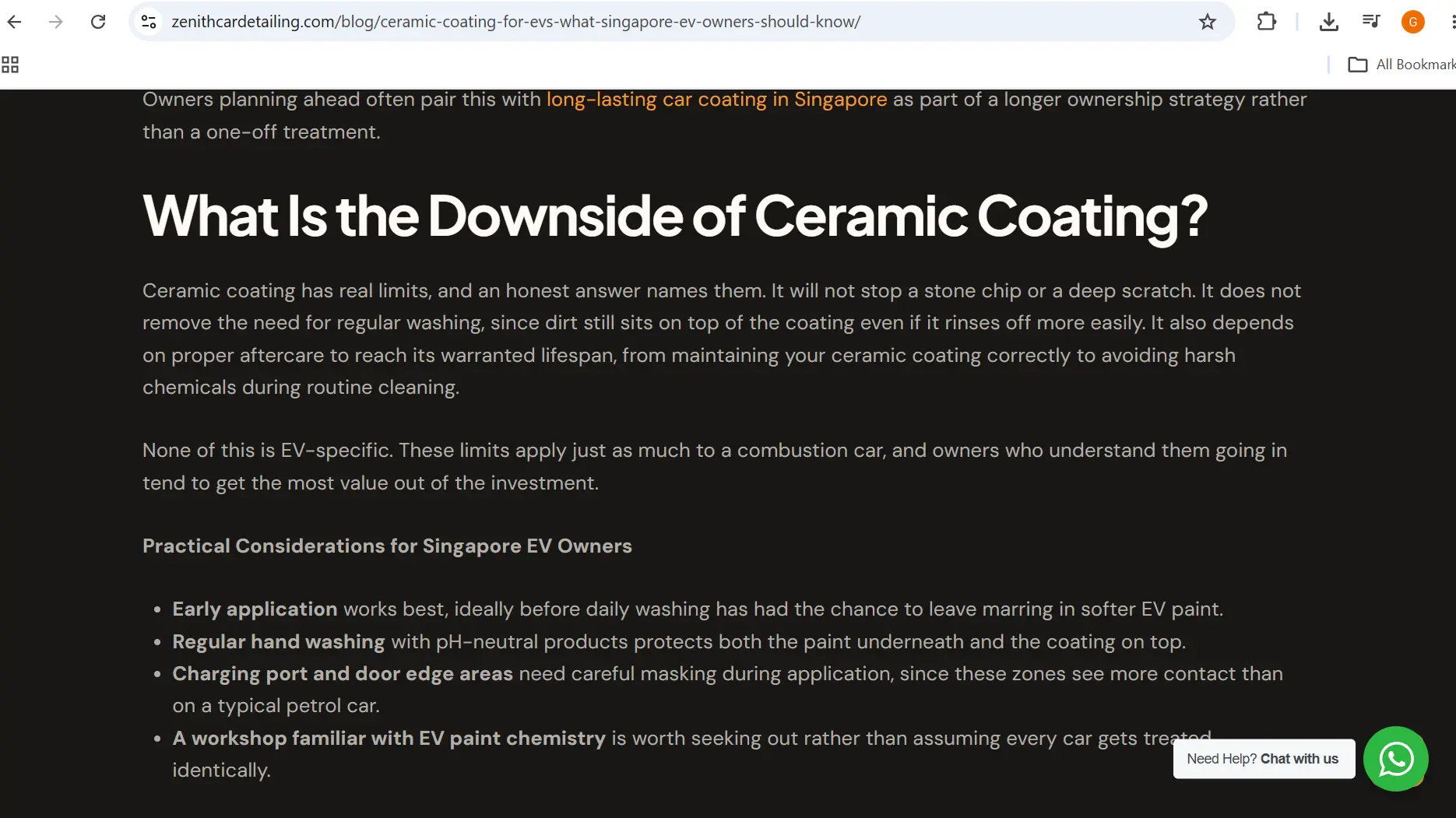
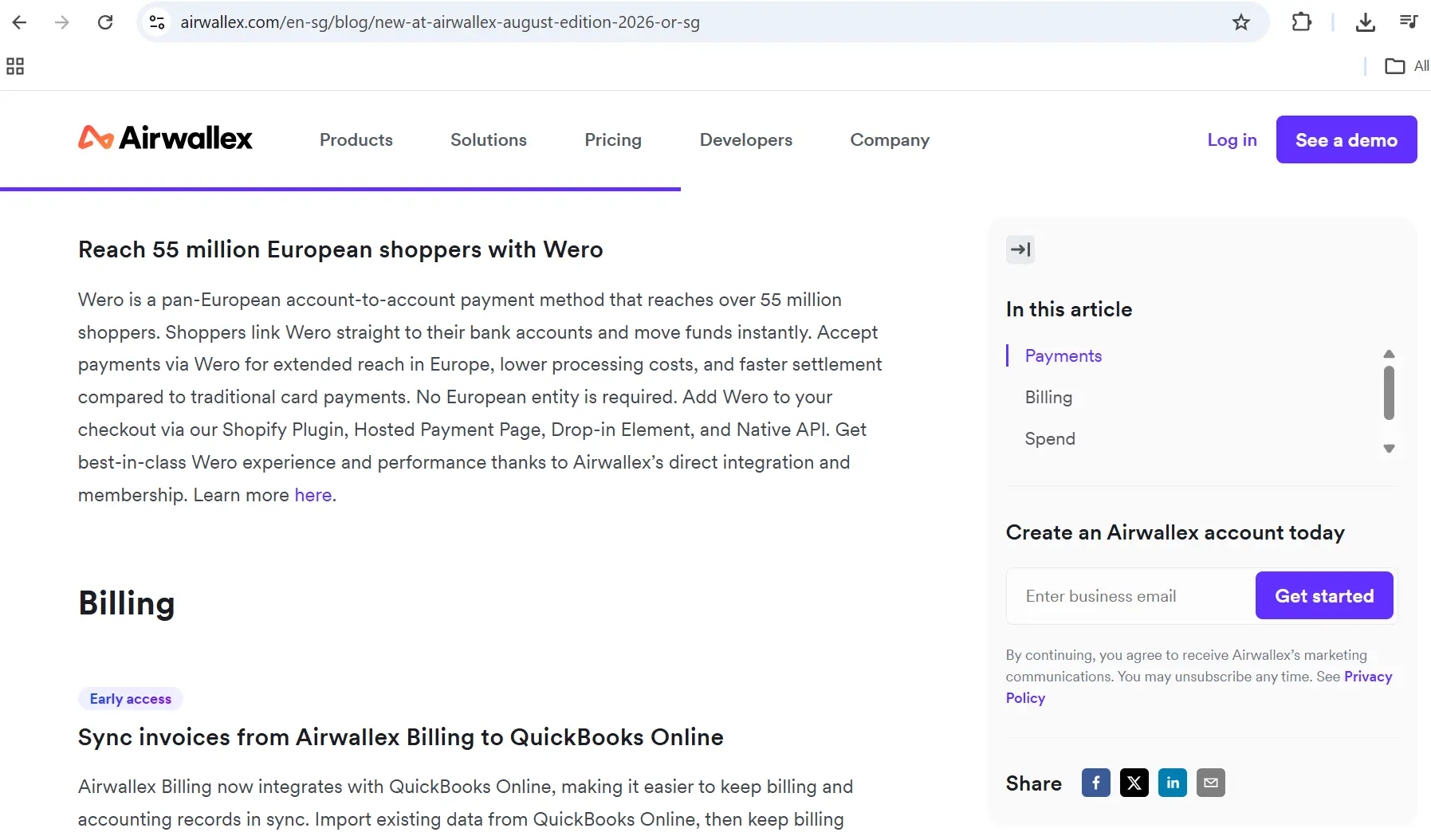
Next, make sure that your page content is laid out in a visually attractive and engaging way that encourages the searcher to continue scrolling and reading.
For example, you may want to adjust the width of your content and break it into easy-to-read sections, rather than running long, dense paragraphs edge-to-edge across the page. See the examples below.
Fonts also play an important part. The idea is that it needs to be readable by your target audience. Imagine having a body font that looks like this:

Finally, make sure your pages setup internal linking and navigation. Link service pages to related posts (vice versa) at suitable points, so patients can continue their reading on the relevant content.
Clear navigation matters too. Breadcrumbs, a logical menu structure, and a “related services” section at the bottom of the page all help. This keeps readers on your site longer which helps SEO.
2. Widget and Button Design
There are many ways to design a blog page to make it look appealing. One way is to use small, intriguing widgets to break up the monotony of the page and add visual appeal to quotes, links, and navigation. See some examples below.
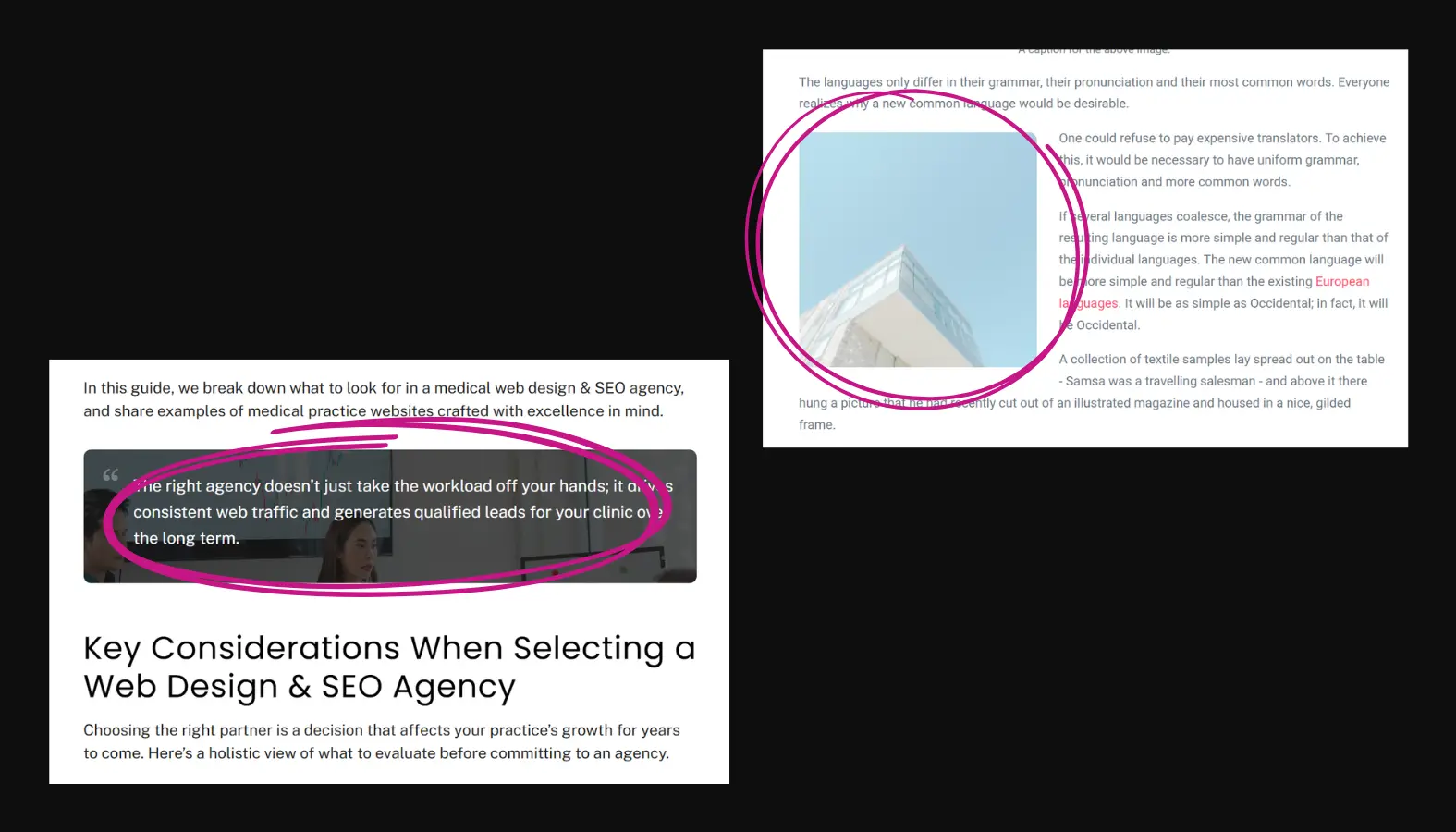
Beyond aesthetics, these widgets also play a direct role in performance. A page that keeps readers engaged, scrolling further and clicking into related content, sends positive signals back to Google that your page is useful.
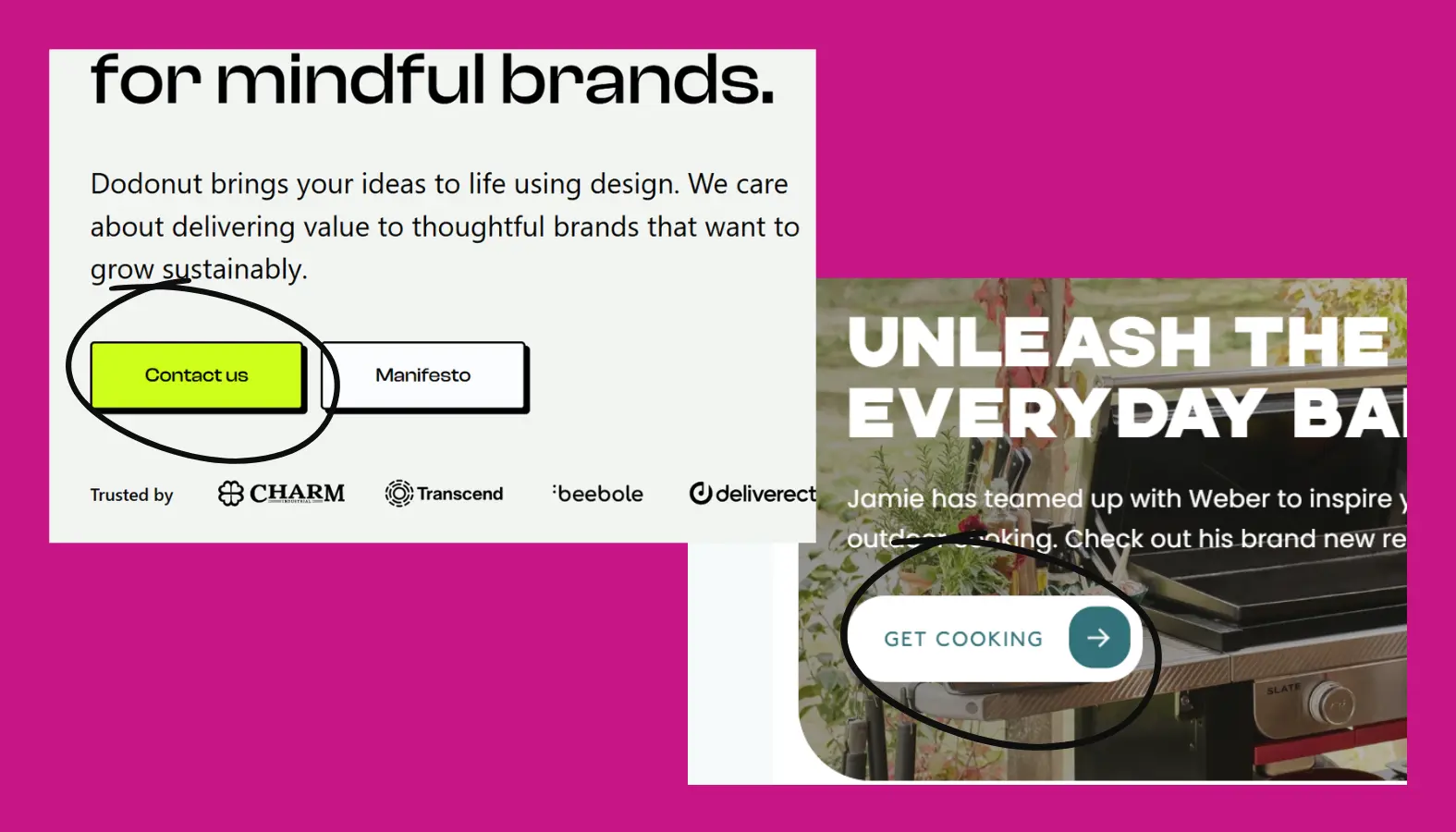
For buttons, there are 3 recommendations from us:
- Add a hover animation — this adds some form of interactivity on the page, which improves the whole experience and entices clicks.
- Make sure the button is eye-catching — ensure it’s not too small, and that it’s designed with an intriguing colour.
- Obsess over the button copy — your button text should give them a reason to act now. Something like “Check Available Slots” helps to remove ambiguity.
Some button examples below:
3. Media & Visual Content
Pay attention to the media content you use, as this can help elevate the whole experience. Choose images that look extremely appealing and are aligned with your content.
Ensure they are in a format such as WebP for faster load times and smaller file sizes without sacrificing quality; this affects user experience as slow-loading webpages can be pretty frustrating for your readers.
Remember to add alt text, which allows search algorithms to understand the image better as well.
Pay attention to the media content you use, as this can help elevate the whole experience.
4. SEO Content Crawlability (NAP)
Ensure your page content, especially NAP (name, address, phone number) data, is crawlable. This ensures Google’s algorithm can read and index your critical information for evaluation and display to searchers.
Some common areas to display important info are in the header & footer, which makes it easier for Google to pick them up.
You can also run your webpages through tools such as DebugBear, SpeedVitals.com, or PageSpeed Insights to check how well your pages are being crawled and indexed.
Local SEO Strategy
In SEO strategy for healthcare and medical practices, local SEO carries much of the weight. This is because of the local map pack.
The local map pack is the box of three business listings that appears at the top of Google search results for location-based searches like “gp near me” or “Neurologist in bedok.”
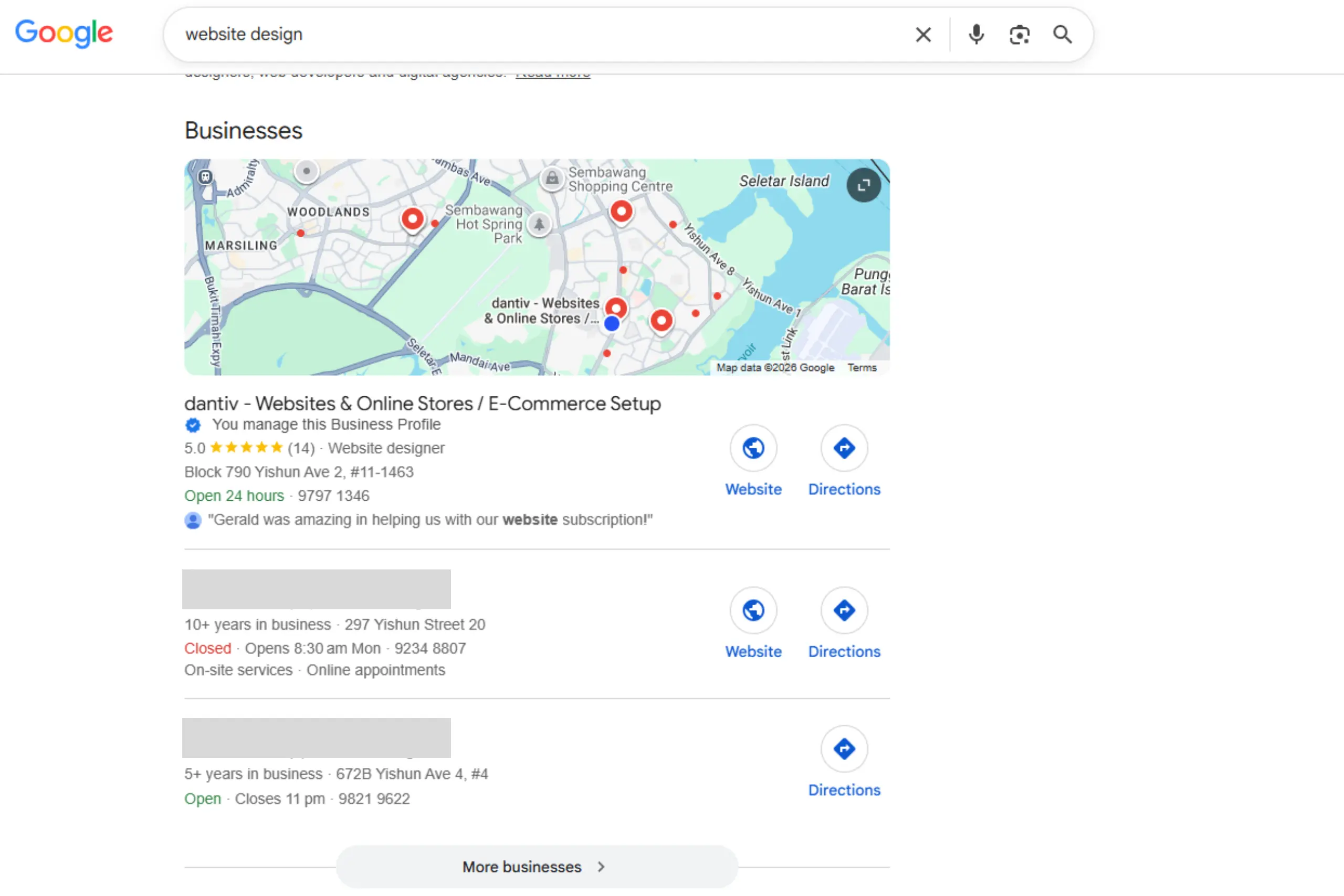
It sits above the regular organic results, meaning it’s often the very first thing a patient sees and clicks on, before they can even get to view other search results.
Appearing in the map pack allows you to appear in front of leads who are actively searching, making the map pack some of the highest-converting traffic you will likely get.
Because it’s tied so closely to your Google Business Profile as well as your website content, it requires a different set of signals like proximity, reviews, and profile completeness to actually perform and rank.
Optimizing for Local SEO
To optimize for local SEO, there are 6 ways to do so:
- Create and verify a GBP — a Google Business Profile is the foundation of your local SEO presence. Without it, your practice won’t be eligible to appear in the map pack at all. Complete Google’s verification process (usually by phone or video) to confirm it’s a real, operating business.
- List your opening hours, services, contact details, social profiles, and images — a complete profile helps Google to trust you, and gives patients everything they need to decide to visit. Google prioritizes listings that give searchers a full picture.
- Attain and reply to customer reviews on your profile — reviews are one of the strongest prominence signals Google uses to rank the map pack. A steady flow of recent, positive reviews builds trust with both Google and prospective patients.
- Link the GBP to your website via structured data — see the next segment on structured data.
- Consider adding keywords in other forms of media — mention your address & location in social media posts, captions, and reels, and use location tags when allowed. This reinforces the geographic association with the area you serve.
- Take part in PR activities — getting your practice featured in local news, health directories, or industry publications builds credibility and often earns valuable authority & backlinks.

Looking to get some help? View our article on selecting a suitable SEO agency to drive performance.
Structured Data for SEO
In SEO, structured data serves to enable your hardworking content to appear with rich snippets. These are enhanced search results such as; star ratings under a listing, FAQ dropdowns, business hours, or review counts shown right next to your practice’s name.
Rich snippets make your listing stand out visually from plain blue-link results, which naturally draws more attention and clicks even if your position on the page doesn’t change.
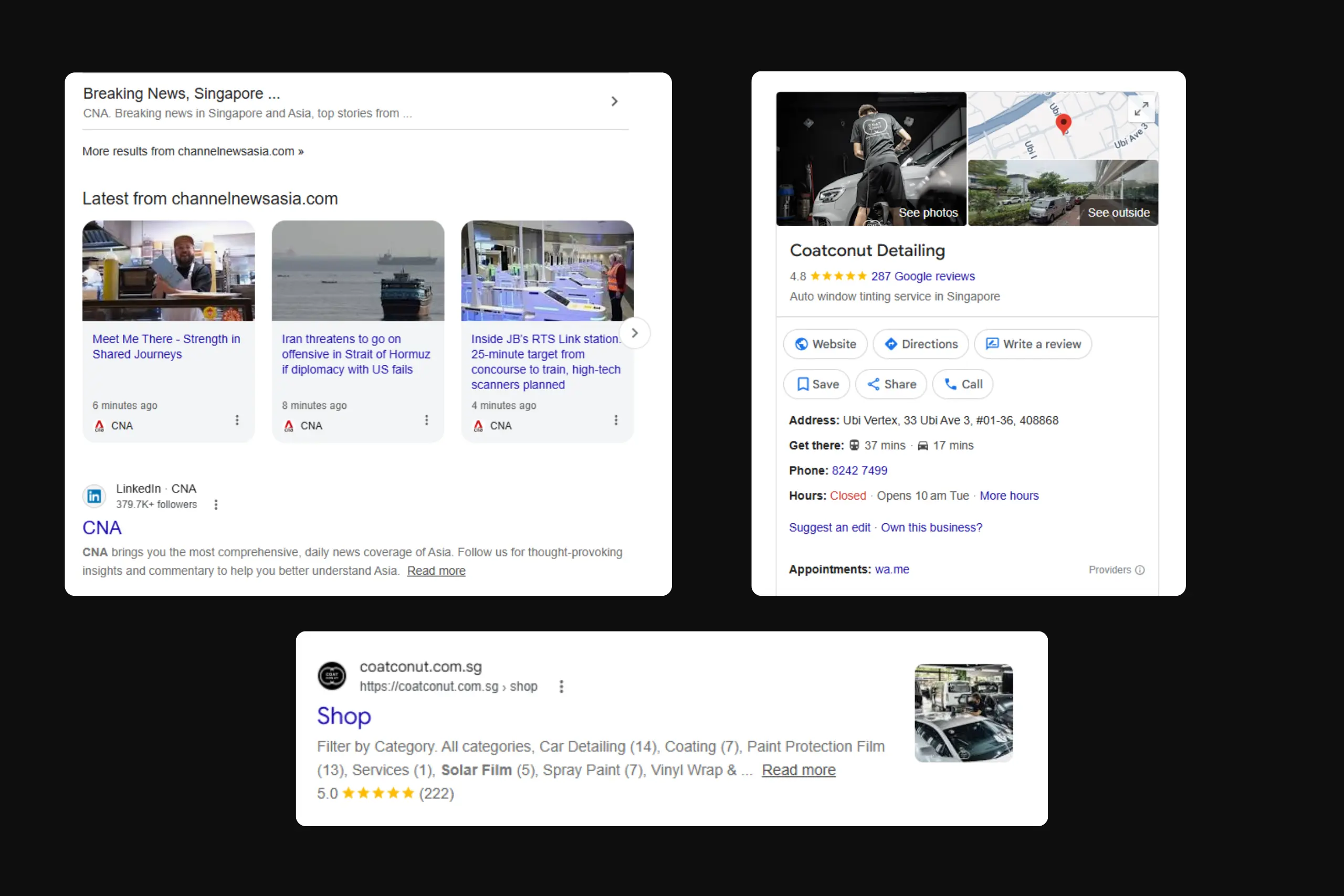
Structured data also lets search algorithms understand which digital entities are associated with your website. This is done by adding your Google Business Profile link and social media URLs (Facebook, Instagram, LinkedIn, etc.) as sameAs references.
This essentially tells Google “these profiles and this website all belong to the same practice.” This helps consolidate your online presence into a single, recognized entity.
When implementing structured data, take reference from schema.org. This is where all standardized schema types and properties are defined and maintained.
The main things to include in your structured data are:
- Organization/MedicalOrganization — your practice name, logo, address, and contact details
- Opening hours — accurate business hours, including any holiday or seasonal changes
- Services offered — the specific treatments or specialties your practice provides
- sameAs links — your Google Business Profile and social media URLs, tying everything to one entity
- Reviews/AggregateRating — star ratings and review counts, so long as the reviews are genuinely displayed on the page
While adding structured data isn’t a must, it does help in various ways to boost click-through and present your organisation as one entity.
SEO Analytics & Iteration
We come to arguably the most important part of medical SEO: analyzing performance. We’ll break this into three parts:
- SEO Analysis — reviewing performance and data to see if your content is being indexed and displaying in search results.
- Improvements & Iteration — planning and executing new SEO strategies to increase impressions, clicks, and keyword coverage.
- Solving SEO Issues — common SEO issues and how to resolve them.
1. SEO Analysis
You should connect Google Search Console and Google Analytics to your website. This allows you to review critical information about your SEO efforts.
And while we’re at it, we recommend to add a heatmap tool such as Hotjar as well. Provides recordings on actual users scrolling your site.
By reviewing this info, you get a good feel of where you stand, what’s actually doing well, and where you should improve.
Below are the metrics to pay attention to:
- What keywords you are being found for — shows the actual search terms driving impressions and clicks, which may include queries you didn’t originally target.
- Ranking position of your pages — tracks where each page sits in search results over time, so you can spot pages close to breaking into the top 3.
- Whether your content is indexed — confirms Google has actually crawled and added your pages to its index; a page can’t rank at all if it isn’t indexed.
- Which content is popular — highlights the pages getting the most traffic and engagement, useful for spotting what to double down on or update further.
- Where your leads come from — reveals which channels (organic search, social, referrals, paid ads) are actually converting visitors into appointments.
- Time spent on your website — indicates how engaging or useful your content is; low time-on-page can signal content that isn’t answering the searcher’s question.
2. Improvements & Iteration
Now it’s time to build on what you’ve achieved.
For content that’s doing well — great, let your winners run, but continue to monitor performance.
For content that’s not doing well — review the content’s search position and the competition. Test out ways to improve it, such as adding more useful content, improving readability, updating outdated information or strengthening internal links to and from the page.
Also remember to use your newfound knowledge to do A/B testing and also plan and execute new content for better effect.
3. Solving SEO Issues
Even with a solid strategy, issues can creep in over time. A page silently drops out of the index, a redirect breaks internal links, or a competitor overtakes a keyword you used to own.
Regularly checking Search Console and Analytics helps you catch these early, before they quietly cost you months of traffic and leads.
Here are some common issues and their fixes:
- Page not indexed — check Search Console’s URL Inspection tool to see why. Common causes include “noindex” tags, page being blocked in robots.txt, or Google simply yet to crawl the page. Request indexing directly once the issue is fixed.
- Structured data not correctly implemented — use Google’s Rich Results Test to validate your schema. Errors are often caused by missing required properties, incorrect data types, or markup that doesn’t match the page content.
- Ranking drop on a previously strong page — check if a competitor has published stronger or more updated content or if the page’s information has become outdated
- Slow page speed / poor Core Web Vitals — run the page through PageSpeed Insights to identify culprits like unoptimized images, excessive scripts, or slow server response times.
- High bounce rate — analyse if the page matches search intent (a mismatch sends visitors back to results quickly), if load speed is discouraging visitors from waiting, or if the content simply fails to keep engaged visitors on the site.

Looking to get some help? At dantiv, we are the leading SEO agency in Singapore for medical and healthcare SEO.
Investing in SEO for Visibility
You need a degree of specialisation for Medical SEO; it’s an ongoing system of content, on-page experience, local presence, structured data, and analytics working together.
Get the fundamentals right, keep iterating based on what the data tells you, and your practice will have a good chance to rank, win the click, and turn that click into a booked patient.